
The Regime’s Defeat Reaches the Camp
The Zone of InterestThis thread follows how military collapse slowly penetrates the camp’s language, expectations, and daily relationships.
increasing Bearing strength in each event
 decreasing
Bearing strength in each eventdecreasingConfidence After the Invasion
Confidence After the Invasion
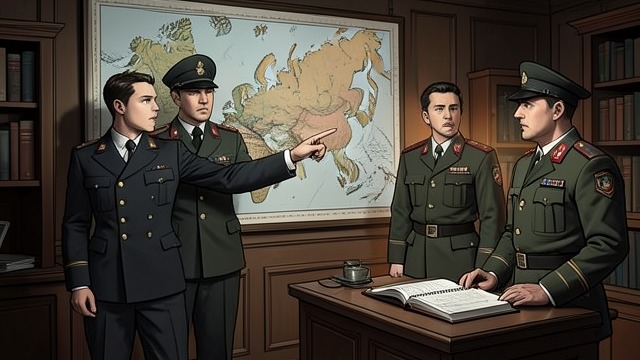
Victory is treated as inevitable
Officers boast that Russia will fall and assume that the United States cannot affect the outcome. Their confidence rests on racial mythology as much as on military events.
Doubt appears at the edges
Burckl warns that industrial mobilization may require a long war. Thomsen also recognizes the need to equip and supply the army, though he still speaks within the regime’s language.
Boris Revises His Beliefs
Boris Revises His Beliefs
The invasion becomes a mistake
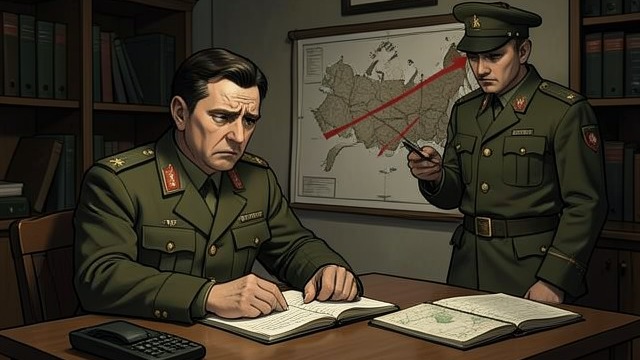
Boris tells Thomsen that invading Russia was foolish and that Germany has already lost. He recognizes that the Soviet Union’s size and resistance make conquest impossible.
The old certainty breaks
His admission marks a change in the friend who once celebrated German military power. The insight is emotionally costly because he remains a nationalist and a serving officer.
The Encirclement of the Sixth Army
The Encirclement of the Sixth Army
News replaces propaganda
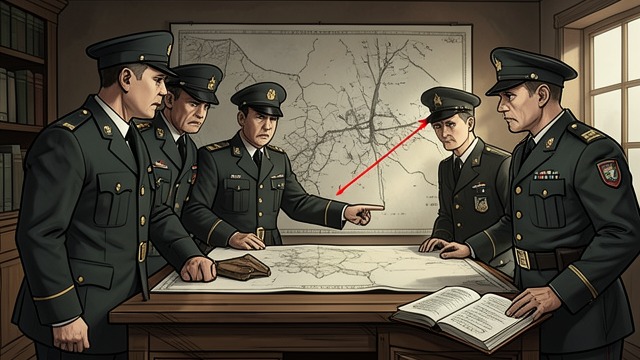
Fritz Mobius tells the officers that Erich von Manstein has retreated and that the Sixth Army is already encircled. Paul Doll has continued to repeat assurances that Friedrich Paulus will win.
Denial becomes visible
Doll tries to restore confidence with improvised remarks, but the military reality is no longer hidden from his colleagues. The scene exposes the distance between his official certainty and the battlefield.
The Surrender at Stalingrad
The Surrender at Stalingrad
A public lie collapses
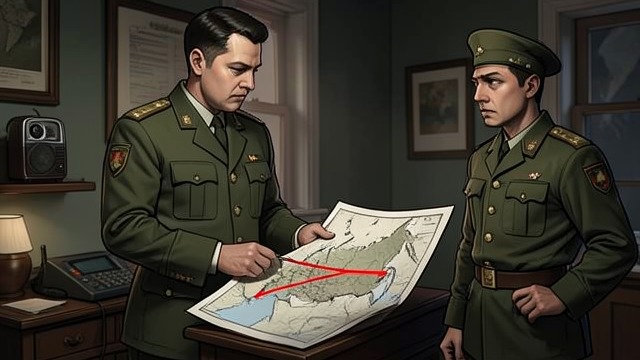
Doll repeats broadcasts presenting the German troops as heroic dead, then learns from Mobius that they surrendered. Large numbers are dead or captive, and Paulus is alive in Moscow.
Defeat enters the camp’s language
The propaganda of sacrifice no longer matches the facts. Doll’s confidence fractures, but he responds by trying to reinterpret events rather than abandon the regime.
The Regime Continues Killing
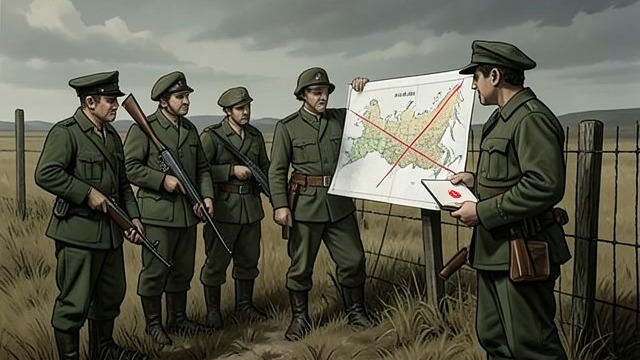
The Regime Continues Killing
Defeat changes no priority
Szmul observes a brief period of embarrassment after the German reverses, followed by new selections across the camp. The regime’s military weakness does not make its killing policy stop.
Destruction remains possible
He fears that the Germans may lose the war against the Allies while still having time to murder many more Jews. The shrinking military future intensifies the danger rather than relieving it.
August–September 1942, during the German advance
December 1942, before the December concert
December 1942, during the concert reception
February 1943, after the German surrender
Spring 1943, after the German defeat in the east
